A. Making a DIY Filtration Device
This is a hands-on activity which provides an opportunity for students to experiment with the filtration process by removing pollutants from water. Students are encouraged to work as a team to design, build, test and compare the performance of their unique water filters.
Objectives:
- To explore what types of pollutants are removed from water by filtration
- To build, test and compare the performance of the water filter
Materials:
- 2-liter plastic bottle cut in half horizontally
- Filter paper or coffee filter
- Rubber band
- Spoon or chopstick
- Filter materials: filter paper or coffee filter, cotton, coarse and fine sand, large and small pebbles, and activated carbon (can be bought from plants stores and aquarium stores)
- Measuring cups
- Large measuring jugs for mixing and storing "the polluted water"
- Polluted water is made by mixing the following items: water, vinegar, salt, pepper, liquid food colouring, small pieces of newspaper, soil, fruit peels, pieces of polystyrene foam beads, etc.
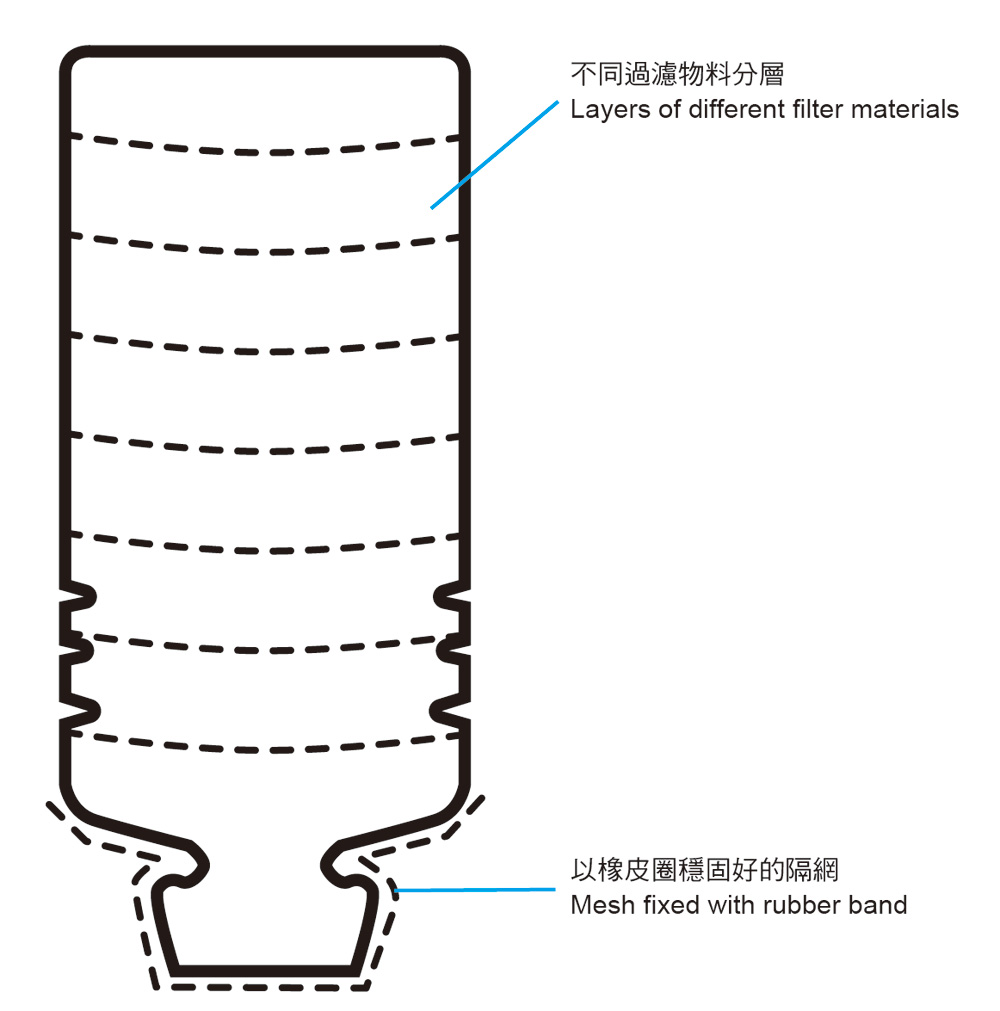
Steps:
Pre-Activity
- Prepare the polluted water.
- Mix the solution thoroughly before preparing students’ samples.
- Prepare the 2-litre bottles by cutting them into halves horizontally. Place a filter paper or coffee filter over the opening of the bottle and fix it with the rubber band.
Activity
- Distribute the following materials and supplies to the students in groups: a pre-cut 2-litre bottle, 100-200 ml sample of the "polluted water", each type of filter materials, and a spoon or chopstick.
- Allow students to design and build their own water filtration device given the filter material options.
- Stir the polluted water gently and pour it into the water filter slowly.
- Record the results (e.g. time, drawing of the design), and observe carefully the whole filtration process.
- The winning group has the clearest filtered sample.
B. Discussion
- Describe the polluted water: how does it look and how does it smell?
- Explain the design of the filtration system. What are the rationale and logic behind it?
- What makes a good filter? What filter material works best?
- What happens during the filtration process? How long does it take for the process to complete?
- Which filtration system gets the cleanest water? Why?
A. Overview
This activity focuses on taking students to water treatment works and allowing them to know more about water treatment in Hong Kong. Included in this activity are suggestions for completing a field trip report that allow students to explore the history of the water treatment works, details about the water treatment process, different water treatment technologies, and the importance of these treatment works in safeguarding the safety and quality and drinking water.
B. Procedures
- Divide the students into 4 research teams. Each group will choose a different topic for their field trip presentation that they can collect specific information before and during their field trip. Presentation topics can be the history of the water treatment works, details about the water treatment process, different water treatment technologies, and the importance of these treatment works in safeguarding the safety and quality and drinking water, etc. Two students from each group will be the presenters to share the information they collect to the class after the filed trip.
- Prior to field trip, they will study information related to the water treatment works in Hong Kong with the help of the teachers and prepare questions to explore or ask.
- Get consent from parents for the visit and ask permission from authorities for the visit. Application shall be submitted by registered schools or non-profit making organisations at least one month prior to the date of the visit.
- On the day of the trip, teachers will first explain the overview, objectives of the visit, and important information to record for their assignments.
- Students record the information by using cameras, or writing down on their note sheet during the trip.
- At the end of the field trip, teachers remind them about the deadlines of the assignments, which are presentation and field-trip reports, and the criteria for evaluation.
- Students provide presentations on a group basis and submit field-trip reports individually.
- Teachers provide feedbacks and suggestions to improve their presentations and writing.