Value of Water
All living things depend on water for survival. In nature, water moves in a cycle around the Earth by the physical processes of evaporation, condensation and precipitation, supplying living things with freshwater and lowering the temperature of the Earth’s surface.
Do you know?
Water makes up two thirds of the weight of the human body. Without it, human cannot survive. The human brain is made up of 95% of water, blood 82% of water and lungs 90%. A mere 2% drop in our body’s water supply can trigger signs of dehydration.
Uses of Water
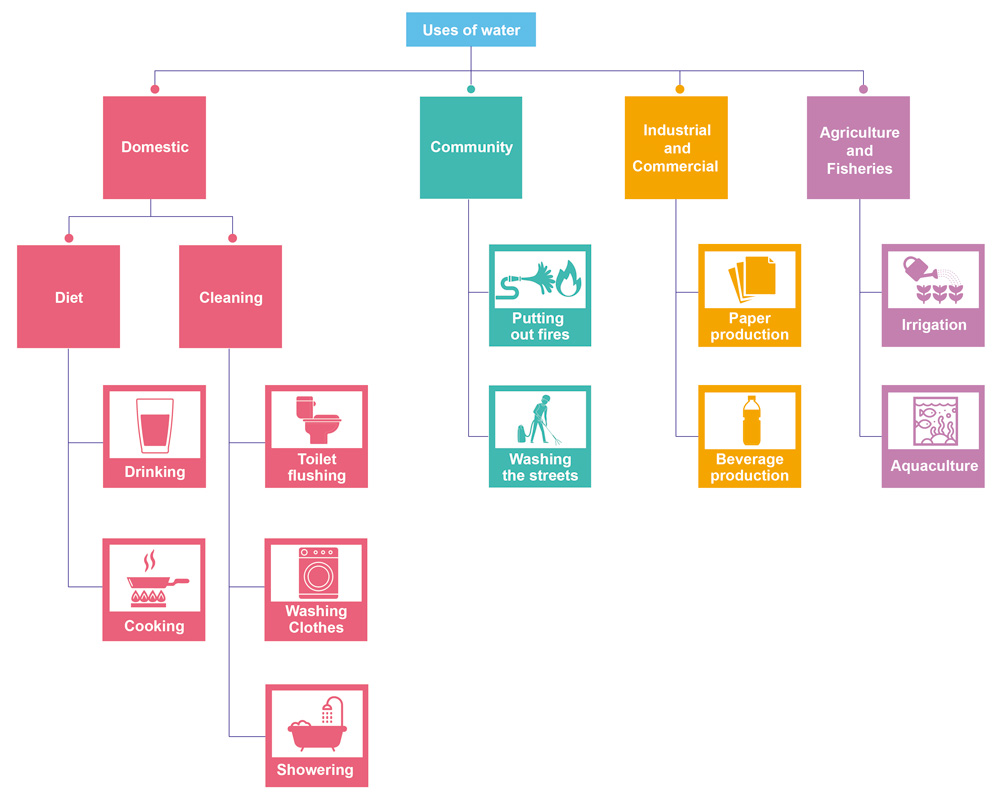
The uses of water are very extensive. We need water in daily lives, industrial productions and agriculture etc. The following are some examples of different uses of water:
Can you imagine a day without water?
- A day without water implies no water for shower, cleaning or even drinking in our daily life.
- Living without water is a public health and safety crisis: firefighters can’t do their jobs and hospitals would be unsanitary.*
- No water for cleaning, will lead to poor hygiene and potential spread of disease.
- Living without water is an economic crisis too: a single nationwide day without water service would put our entire economy at risk. ** For example, suspension of all productions in factories.
- If no water, crops and livestock will die and lead to food shortage and even famine.
(*Source: Imagine a Day Without Water)
Invisible water – "Virtual Water”
Most people think consuming water only involves drinking water, bathing and cleaning; but in fact, there is a huge amount of fresh water consumption embedded in commodities such as food, clothes and paper. The amount of water we consume is far more than we see because a large quantity of water is hidden. The amount of water that is embedded in food or other products needed for their production is known as "Virtual Water”.
Relationship between Water Consumption and Virtual Water
Take Hong Kong as an example, the average daily domestic fresh water consumption per capita is about 150 litres. Around 40% of that is used for bathing, 10% for laundry and the remaining 50% for cooking and other purposes. However, it is just a visible part of our water consumption, merely constituting a small fraction of the total amount of water each of us actually uses every day. There is greatly more fresh water invisibly embedded in commodities and particularly in food that we consume in daily life.
Calculation of Virtual Water
It is essential to know how much virtual water you are consuming based on the type and amount of food eaten so that we can make smart choices in our daily food to reduce water consumption.
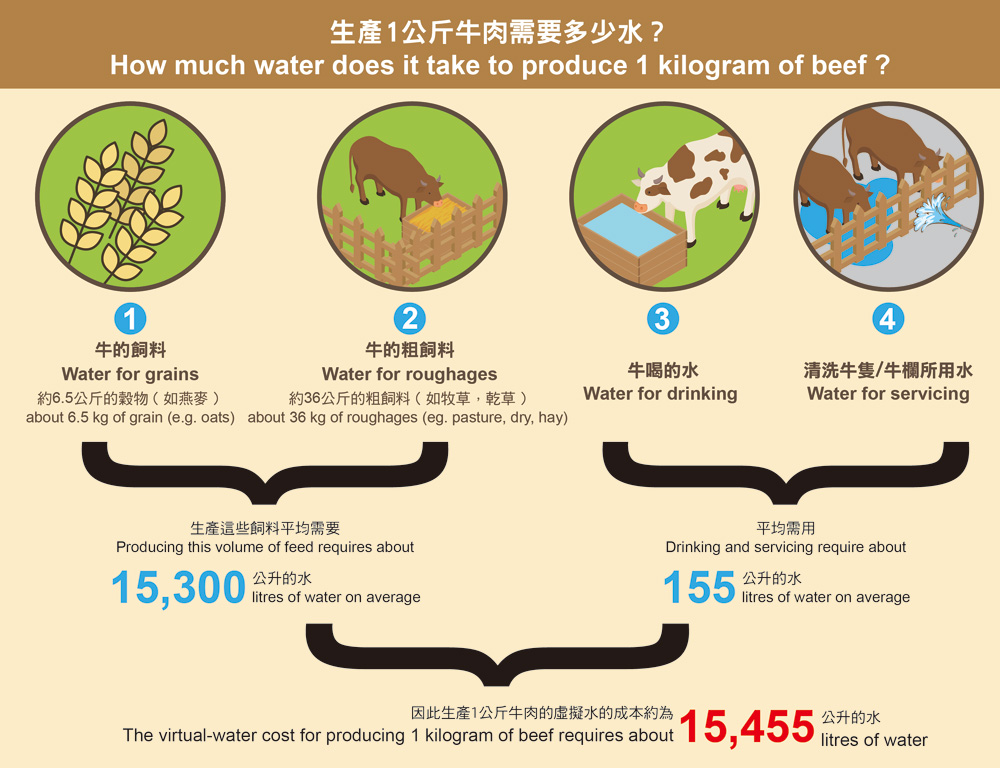
Let’s consider beef for instance. How much water is needed to produce 1 kilogram of beef?
Do you know?
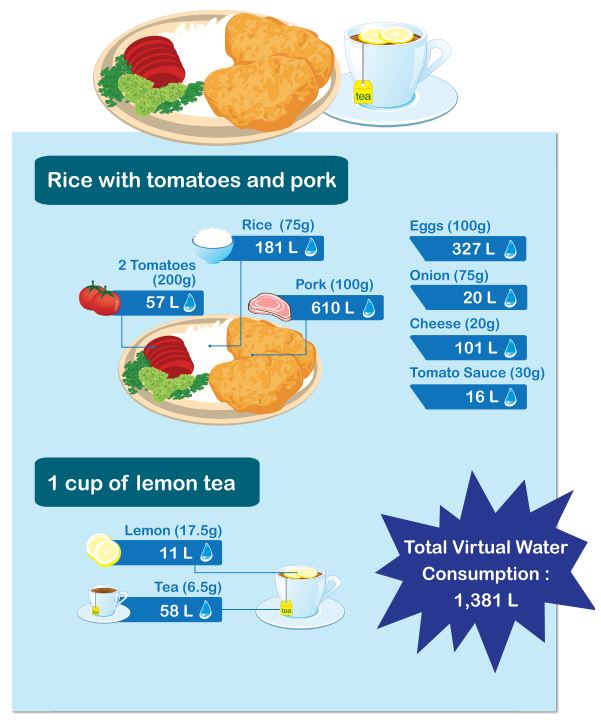
How much water have you consumed in your lunch?
Below are a few more examples to illustrate how much virtual water is needed to produce different products.
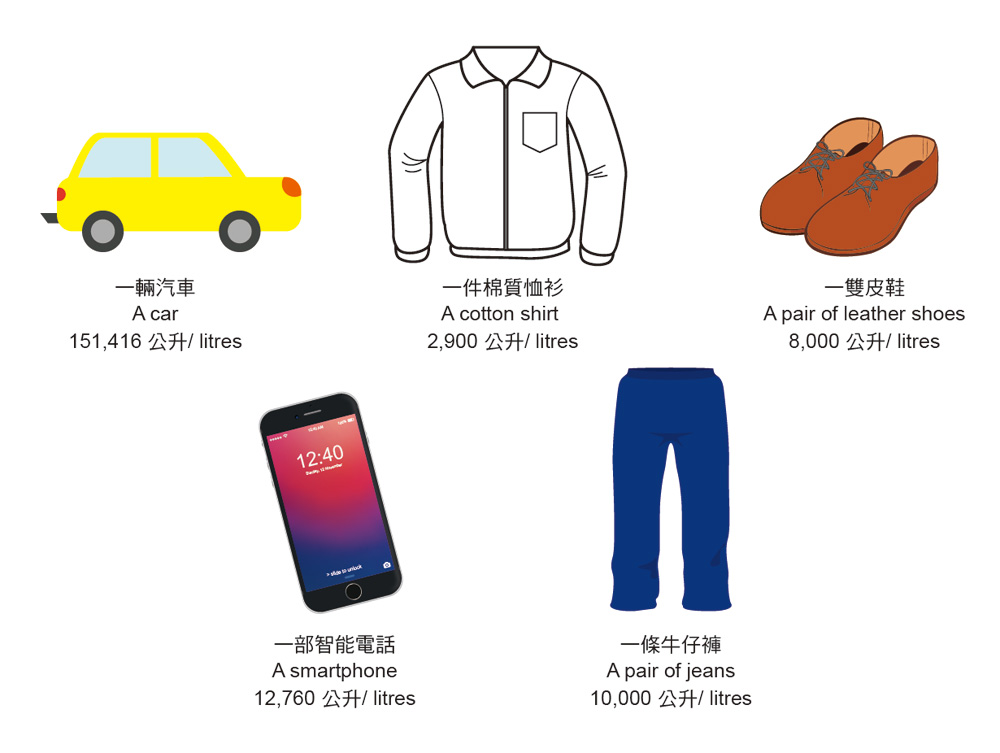
(Source: UN WATER - World Water Day, World Wildlife Fund, Friends of the Earth)
The uses of water are numerous and extensive, and water is an indispensable element to people’s livelihood. However, water is a limited resource and shared by all life, therefore we should cherish this precious resource.