Milestones of Water Supply in 1982 - 2009
1982
Establishment of the Water Supplies Department
The Water Supplies Department was formally established in 1982 responsible for supplying and distributing filtered fresh water as well as flushing water across Hong Kong. It also maintains and improves the entire waterworks system which includes impounding reservoirs, pumping stations, treatment works, service reservoirs and pipelines that carry water across the territory.
In 1851, the Government set aside in its budget for sinking wells to provide water to the public for free. In 1890, a Water and Drainage Sub-department of the then Public Works Department (PWD) was established and then grew into the Waterworks Office at PWD and retained that status for the next 90 years until the establishment of the Water Supplies Department.
The Department plays a pivotal role in the life of Hong Kong’s people, meeting the needs of commerce and industry while maintaining the sustainability of water resources for the future.
1970s onwards
Expansion of Supply to New Development Areas
Significant improvements to the supply system were required to meet the demand generated by new town developments, the new airport and the surrounding area. A number of new water treatment works were commissioned in the past three decades, including the second largest water treatment works in Hong Kong – the Pak Kong Water Treatment Works – with a designed capacity of 800 000 m3 per day.
The supply and distribution network have also been expanded. At present, over 99.99% of Hong Kong people enjoy the supply of tap water.
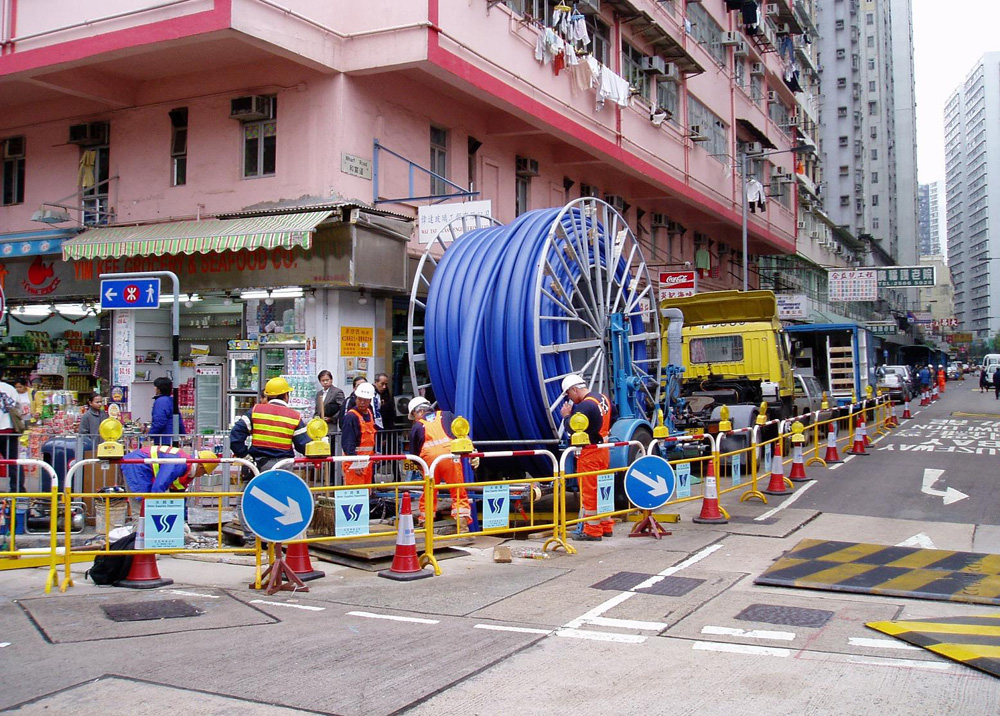
Polyethylene pipe being inserted into the old pipe in North Point
2000 - 2015
Replacement and Rehabilitation of Water Mains
Hong Kong’s fresh water and seawater supplies are provided through a network of about 7,800 km of water mains. Most of these water mains are underground. A substantial portion of the water mains was laid more than 30 years ago. They are progressively approaching the end of their design service lives and have become increasingly difficult and costly to maintain. The previous way of carrying out piecemeal and small-scale replacement works was not considered effective. The Government therefore started in 2000 to implement a comprehensive and cost-effective management plan for the water supply network. This involves the replacement and rehabilitation of some 3,000 km of aged water mains in stages to rejuvenate the water supply and distribution network. The programme has been substantially completed at the end of 2015.
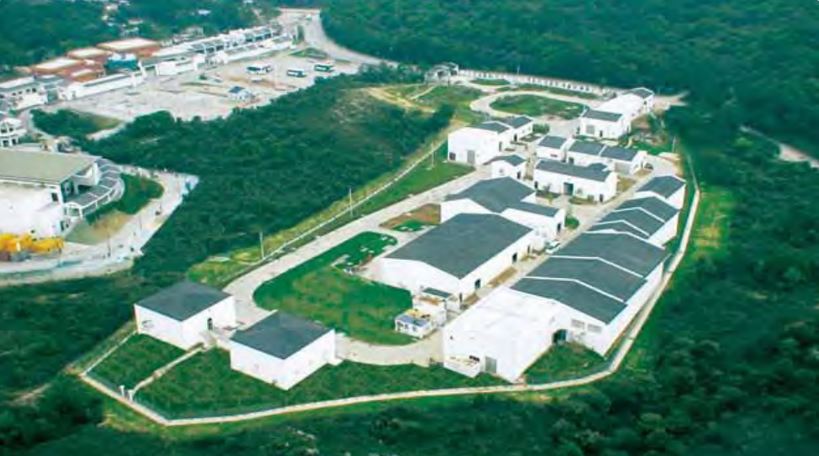
Ngong Ping Sewage Treatment Works (foreground) and Ngong Ping Tourist Village (back)
2006
Water Reclamation Trial Schemes
Reclaimed water is highly treated wastewater. As it contains a low level of nutrients (primarily nitrogen and phosphorous), it can be beneficial for plant growth and may help reduce the amount of fertilisers used in landscaping. Many countries are using reclaimed water to irrigate parks, golf courses and sports fields as well as in urban landscaping. It is also used to clean roads, wash cars and fight fires. It can be a source of water for toilet flushing and, in some cases, it has been used in industrial plant.
With this background, pilot schemes involving use of reclaimed water began in Hong Kong in 2006. The first took place at Ngong Ping, a renowned attraction with a tourist village and the world’s largest sitting bronze Buddha accessible by cable car. Effluent collected and then treated in a sewage treatment scheme provides water for flushing toilets and some non-potable uses in the Ngong Ping Tourist Village.
A second water reclamation scheme has been established at Shek Wu Hui as a demonstration scheme. Here treated effluent from the Shek Wu Hui Sewage Treatment Works passes through a second high-level treatment unit before being used for flushing and irrigation.
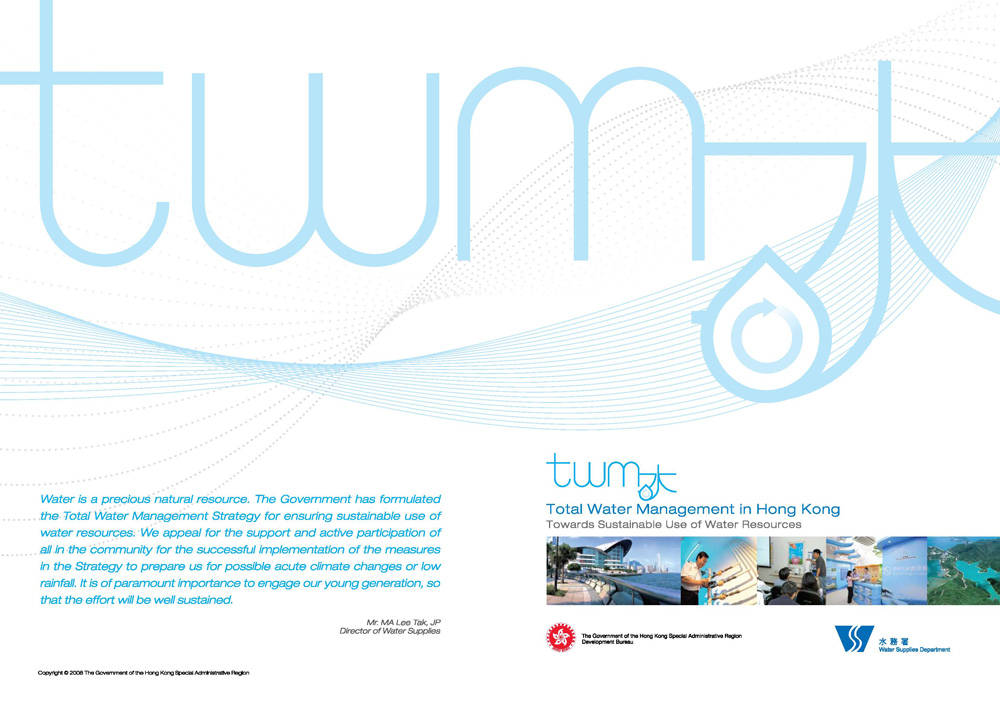 The Total Water Management Strategy in 2008
2008 Onwards
Implementation of Total Water Management Strategy
Total water management (TWM) is a modern concept for managing water resources in all aspects. TWM seeks to achieve an optimal balance between water demand and water supply in order to ensure sustainable use of water resources. A TWM strategy is required to better prepare Hong Kong for uncertainties such as acute weather changes and low rainfall. It also helps enhance Hong Kong’s role as a good partner of other municipalities in the Pearl River Delta in promoting sustainable use of water in the light of the region’s rapid growth in water demand. In 2008, the Government adopted a TWM strategy which aims to manage the demand and supply of water resources in an integrated, multi-sectoral and sustainable manner.
For details, please visit Total Water Management Strategy.
2009
Declaration of Waterworks Structures as Monuments
In 2009, 41 waterworks structures in Hong Kong were declared historic monuments and are now protected for the future. They have been integral to the development of Hong Kong over the past 160 years.
The list of structures includes dams and tunnel inlets, long aqueducts that carry water from reservoirs to the city, sturdy stone bridges, watchman's cottage and residential quarters for the staff responsible for over operations. These structures can be found in Pok Fu Lam and Aberdeen, across the Tai Tam Country Park and in the valleys of Kowloon and the New Territories. They are the foundation stones of Hong Kong.
Full details of the waterworks monuments are documented in the commemorative booklet "Stream of Memories".