Introduction
Water Resources on Earth

Fresh water is a precious natural resource. Less than 2.5% of the world's water is fresh water while the rest is seawater. But still, not all of the fresh water can be used. Among the fresh water resources in the world, a large part of it is the polar ice caps that have not yet melted. Therefore, less than 1% of the water mass is accessible by mankind in the form of fresh water.
The geographical distribution of fresh water is highly uneven. Supply of clean and safe drinking water is a problem in many parts of the world. More than half of the world's freshwater resources are contained in 9 countries (include Russia, China, India, Indonesia, Peru, Brazil, Colombia, United States, Canada). It is not difficult to imagine the scarcity of freshwater resources in other countries.
Hong Kong’s Fresh Water Resources
With no natural lakes, large rivers or underground water, Hong Kong, a densely populated centre of trade and finance, faces the daunting task of securing a stable and adequate supply of water to meet its development needs. Despite healthy, though erratic, rainfall which averages 2,431.2 mm a year, the undulating nature of much of the territory’s 1,106.81 km2 of land has made collection and storage of the precious rainwater a challenge.
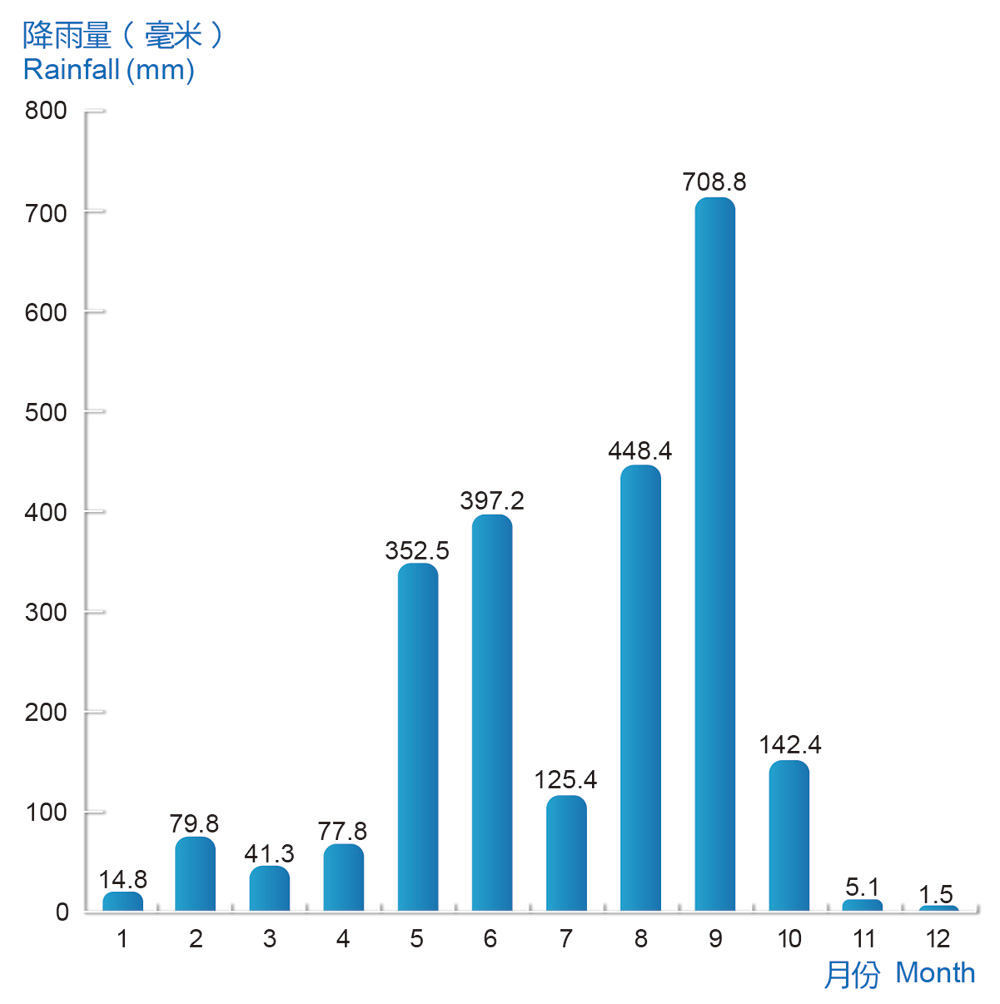
Record of Hong Kong Rainfall 2020 (Source: Hong Kong Observatory)